



A convincing 1980s image needs more than the words retro or vintage.
The strongest results usually come from combining several signals at once: period clothing, recognizable locations, era-specific objects, direct flash, faded film color, and slightly imperfect photography.
If you want to test any 1980s AI photo prompt below, you can start with Wann’s AI Text to Image tool and customize the subject, location, or props to match your own idea.
Instead of repeating the same mall, yearbook, or family-living-room formula, this guide focuses on ten different 1980s scene recipes that feel more specific and more believable.
4 Realism Anchors That Make an 80s Photo Feel Real
Before jumping into the prompts, it helps to understand what usually creates the 1980s look.
| Visual Layer | What to Write in the Prompt | Why It Matters |
|---|---|---|
| Era Objects | CRT monitors, cassette racks, corded phones, paper maps | They instantly place the image in a specific decade |
| Lighting | Direct flash, fluorescent light, warm lamp light | They recreate common real-world 1980s photo conditions |
| Film Texture | Soft grain, faded colors, uneven exposure | They reduce the overly polished digital look |
| Composition | Casual snapshot, off-center framing, slight blur | They make the image feel less like a modern ad shoot |
The ten examples below each use these anchors in a different way.
1. Basement Garage-Band Drummer
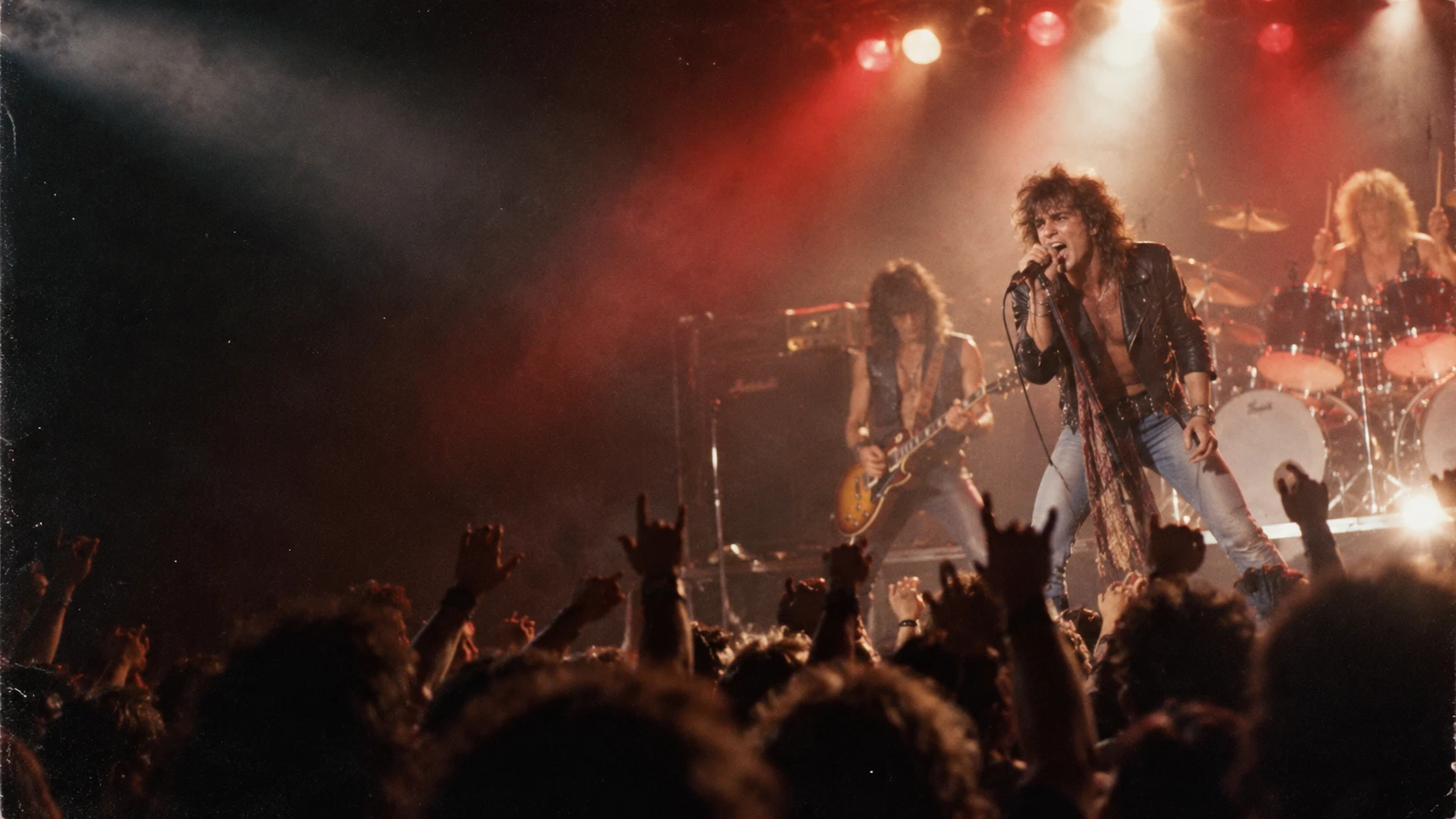
This scene works well for music culture, rehearsal spaces, and underground 80s energy.
Authentic 1980s basement band rehearsal photograph, drummer seated behind a compact acoustic drum kit, faded band T-shirt under a denim vest, concrete basement walls, stacked guitar amplifiers, coiled audio cables on the floor, simple overhead bulb mixed with direct camera flash, slightly warm film tones, visible analog grain, casual rehearsal snapshot, imperfect framing, realistic 1980s photography, 4:3
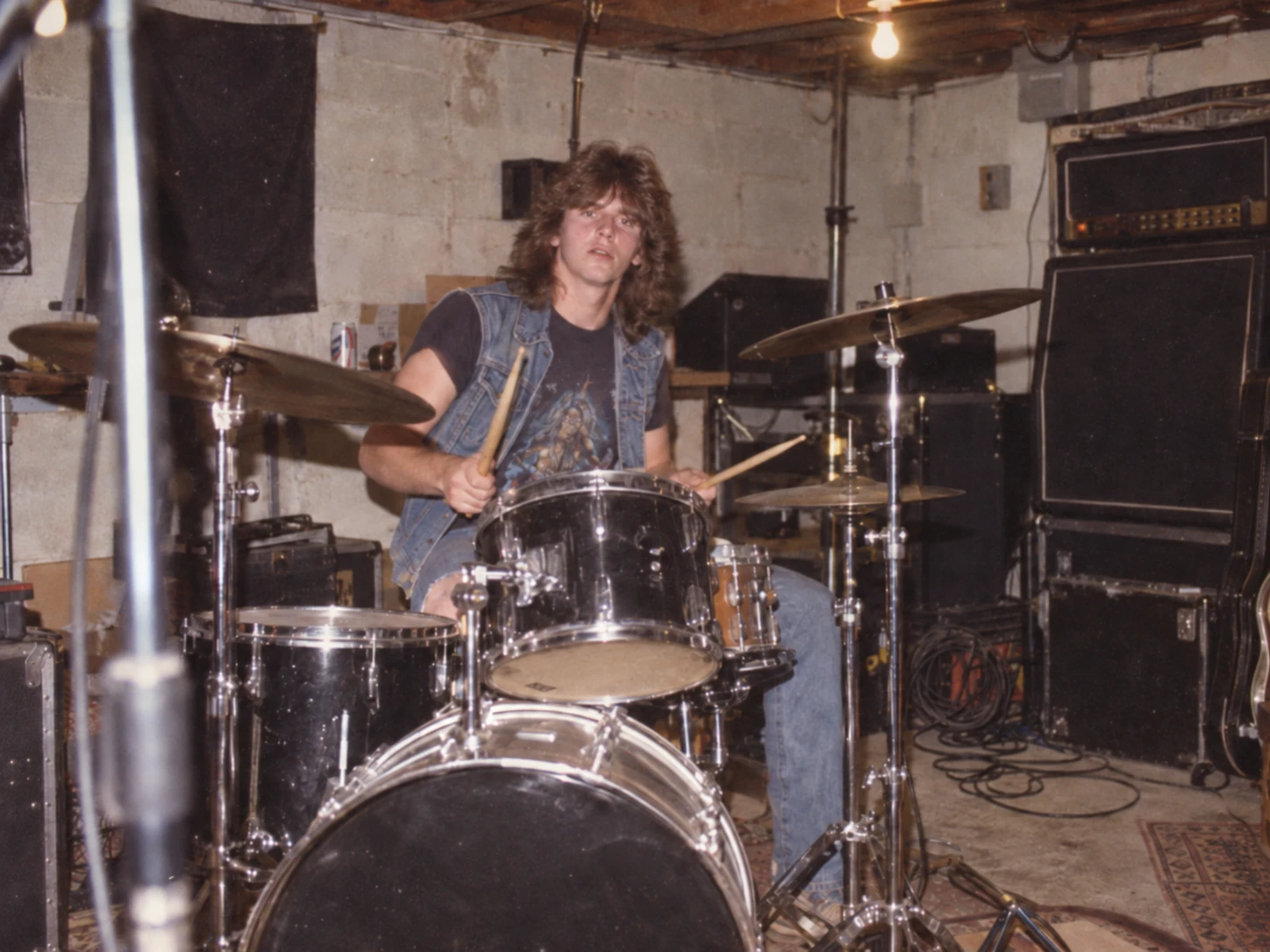
Authenticity Anchors: acoustic drum kit / stacked amplifiers / overhead bulb + direct flash / imperfect framing
What you can change: drummer → guitarist / bass player / small band; basement rehearsal space → community hall stage / small practice room; denim vest → flannel shirt / leather jacket.
A scene like this should feel like a friend casually documented a rehearsal, not like a modern promotional shoot.
2. Local TV Weather Presenter
A local television studio creates a very specific 1980s visual language.
1980s local television weather presenter standing beside a large printed weather map inside a small broadcast studio, structured navy blazer, simple tie, beige studio walls, boxy studio camera visible at the edge of frame, bright flat television lighting, slightly muted broadcast-era colors, mild analog softness, realistic behind-the-scenes station photograph, 4:3
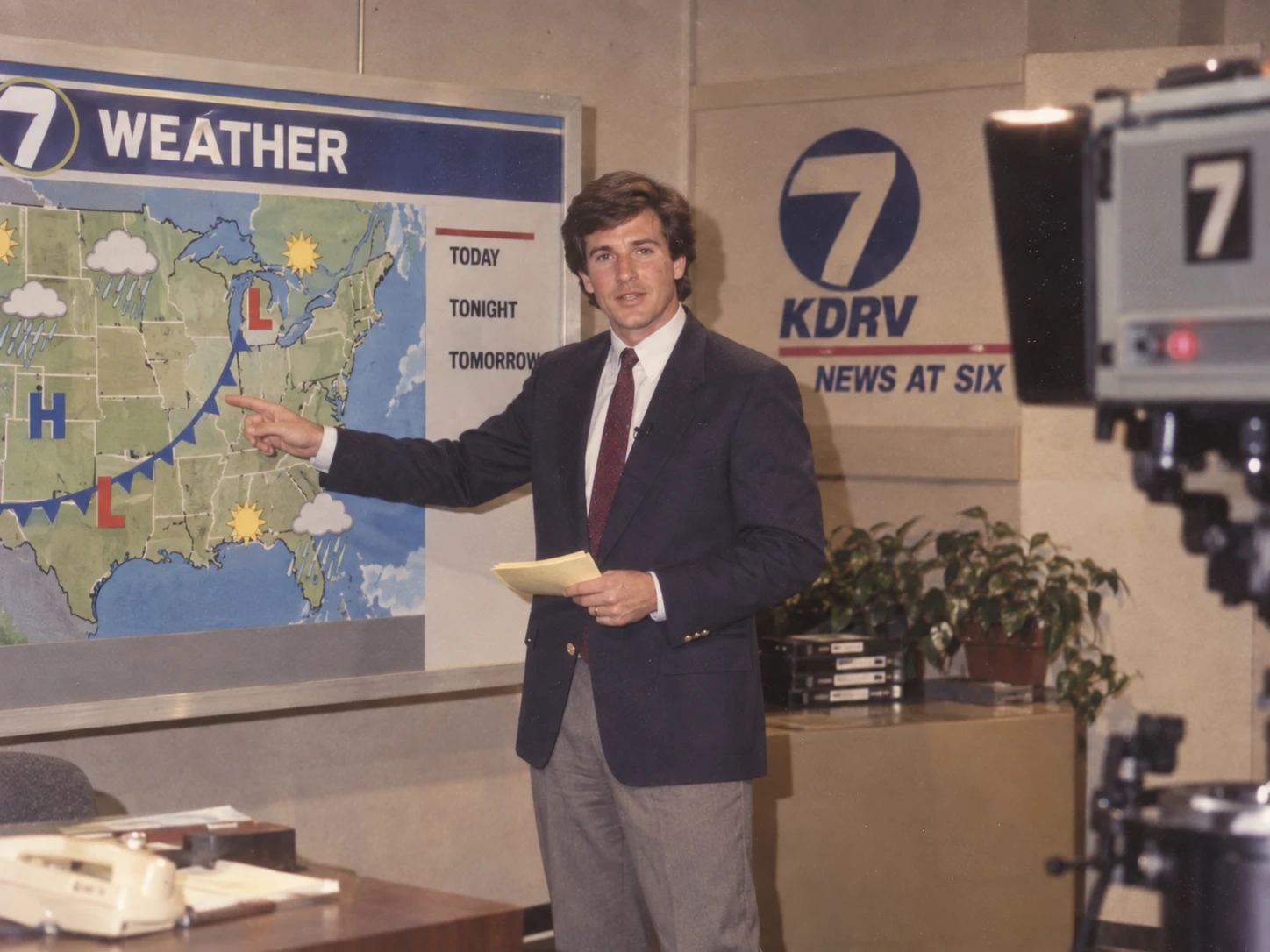
Authenticity Anchors: printed weather map / boxy studio camera / flat television lighting / muted colors
What you can change: weather presenter → news anchor / sports host; printed weather map → news board / sports results chart; navy blazer → gray suit / cream blazer.
Avoid adding modern LED screens or sleek studio displays, or the decade will stop feeling believable.
3. Independent Record Store Clerk
This scene builds its 80s identity through the merchandise and store layout rather than through filters alone.
Authentic 1980s record store photograph, store clerk standing behind a wooden counter surrounded by rows of vinyl records, handwritten price cards, cassette racks and paper album posters, simple striped shirt, warm fluorescent ceiling lights, slightly faded consumer film colors, subtle grain, casual documentary photography, natural unposed expression, 4:3
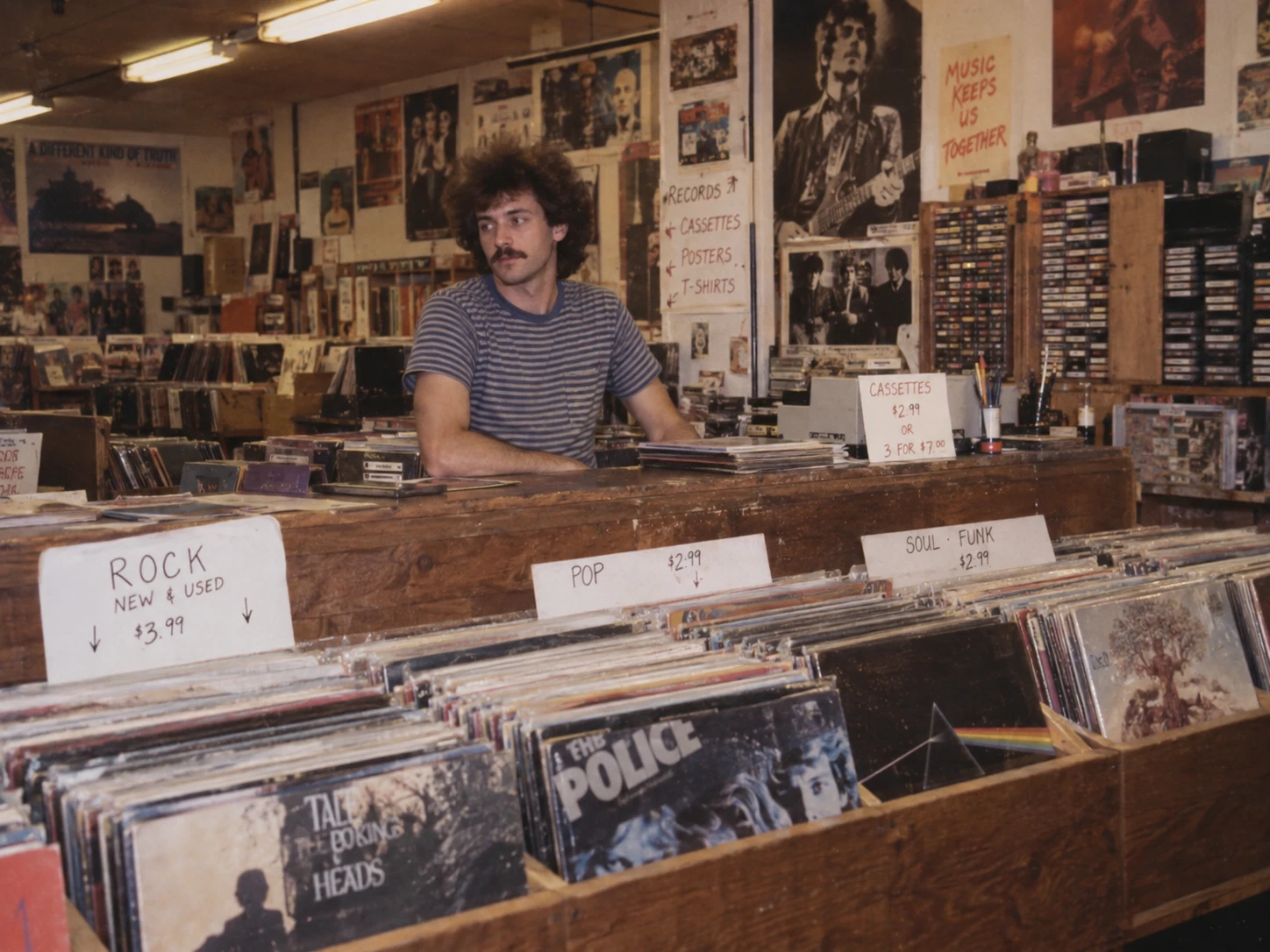
Authenticity Anchors: vinyl bins / cassette racks / handwritten price cards / fluorescent ceiling lights
What you can change: store clerk → music shopper / two customers; striped shirt → plain sweater / denim jacket; record store → used music shop / small media store.
In this type of scene, the product displays often matter even more than the person.
4. Home Computer Hobbyist
A home computer setup is one of the clearest 1980s visual signals you can use.
1980s home computer hobbyist sitting at a small desk in a modest home study, beige personal computer with bulky CRT monitor, mechanical keyboard, dot-matrix printer paper stacked beside the desk, handwritten computer notes and floppy disks nearby, simple plaid shirt, warm desk lamp, direct camera flash, slightly yellowed film tones, realistic personal snapshot, 4:3
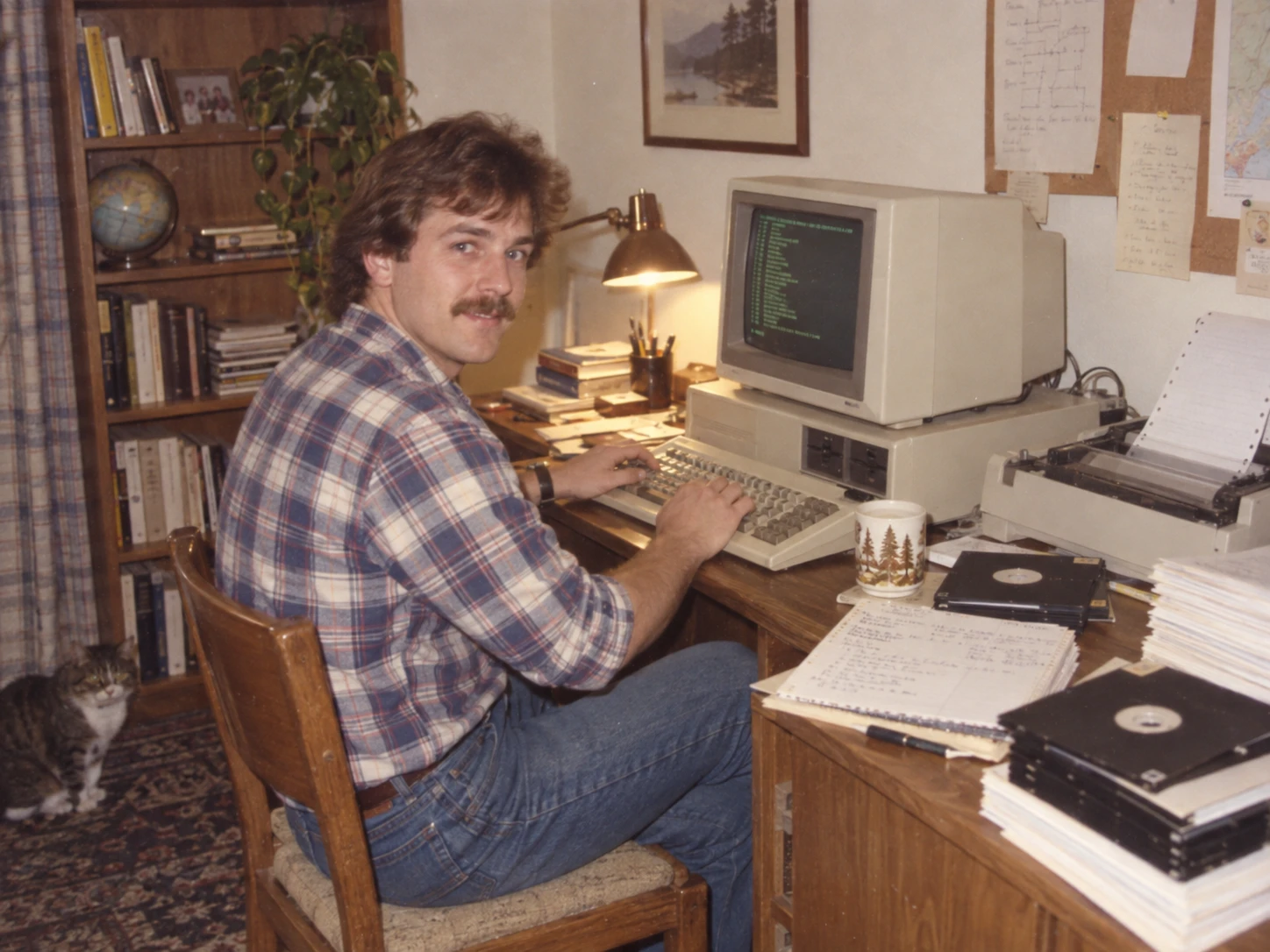
Authenticity Anchors: bulky CRT monitor / floppy disks / dot-matrix paper / warm desk lamp
What you can change: home computer hobbyist → student / young programmer / tech enthusiast; plaid shirt → knit sweater / simple polo shirt; home study → bedroom desk setup / small office corner.
If the model introduces a flat modern display or wireless accessories, the entire scene will lose its period accuracy.
5. Auto Repair Garage Mechanic
This is a more rugged, documentary-style 1980s work scene.
Authentic 1980s auto repair garage photograph, mechanic standing beside an open car hood holding a metal wrench, blue work coveralls, steel tool cabinet, paper service manuals and old automotive parts in the background, concrete floor with natural wear, fluorescent workshop lights mixed with direct camera flash, muted colors, visible film grain, candid documentary style, 4:3
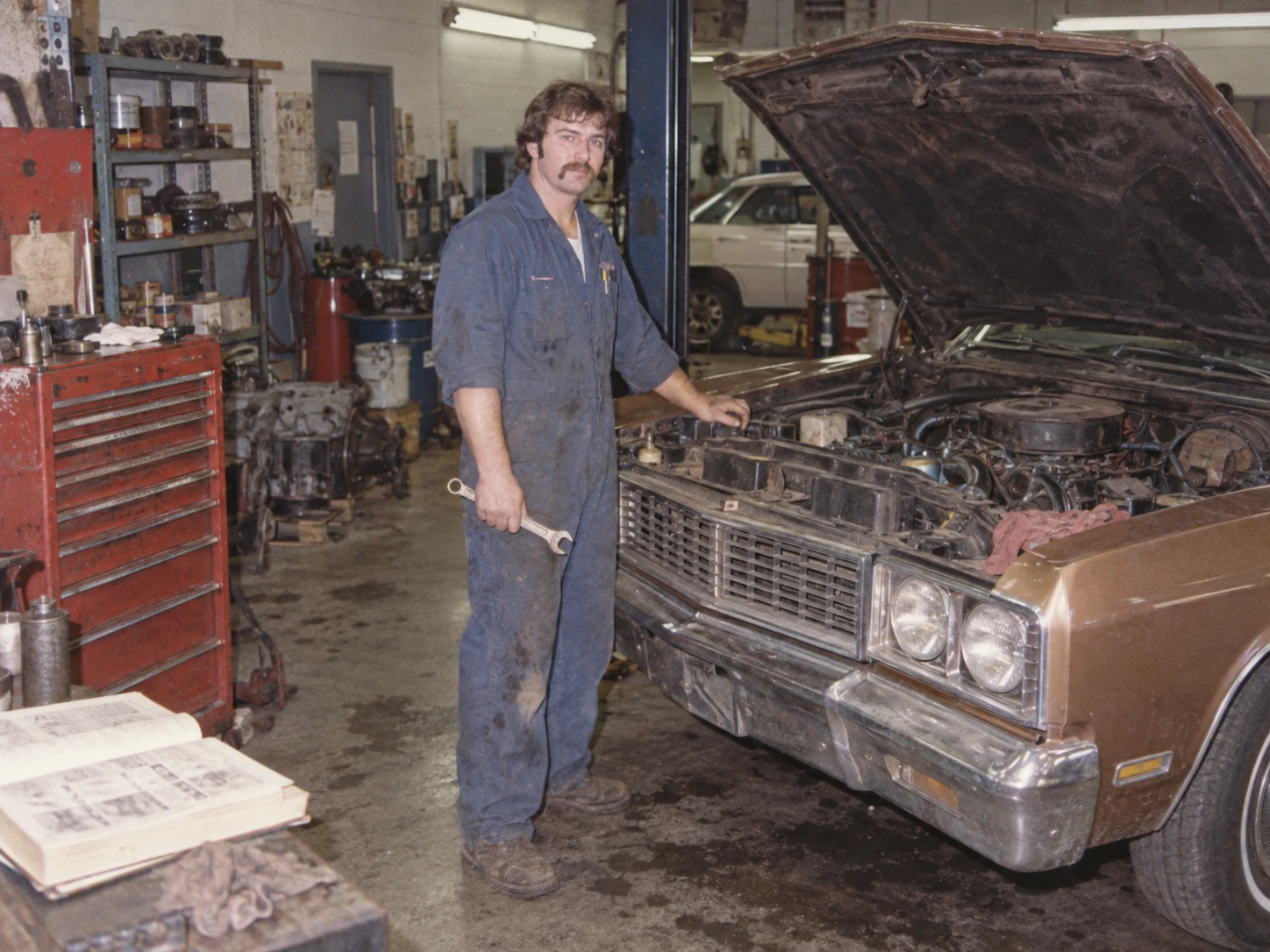
Authenticity Anchors: metal wrench / paper service manuals / steel tool cabinet / fluorescent workshop lights
What you can change: mechanic → garage owner / repair assistant; open car hood → car lifted on service stand; blue work coveralls → gray utility uniform.
This kind of image should not look too clean. A little visual roughness helps it feel real.
6. Saturday Bowling League
This creates a very different kind of social 1980s atmosphere than arcades or roller rinks.
1980s bowling league photograph, bowler standing near the lane holding a classic bowling ball, patterned short-sleeve bowling shirt, wooden lanes, molded plastic seats, manual score sheets on a small table, warm overhead lights, direct flash photography, slightly washed film colors, casual local league snapshot, natural body posture, 4:3
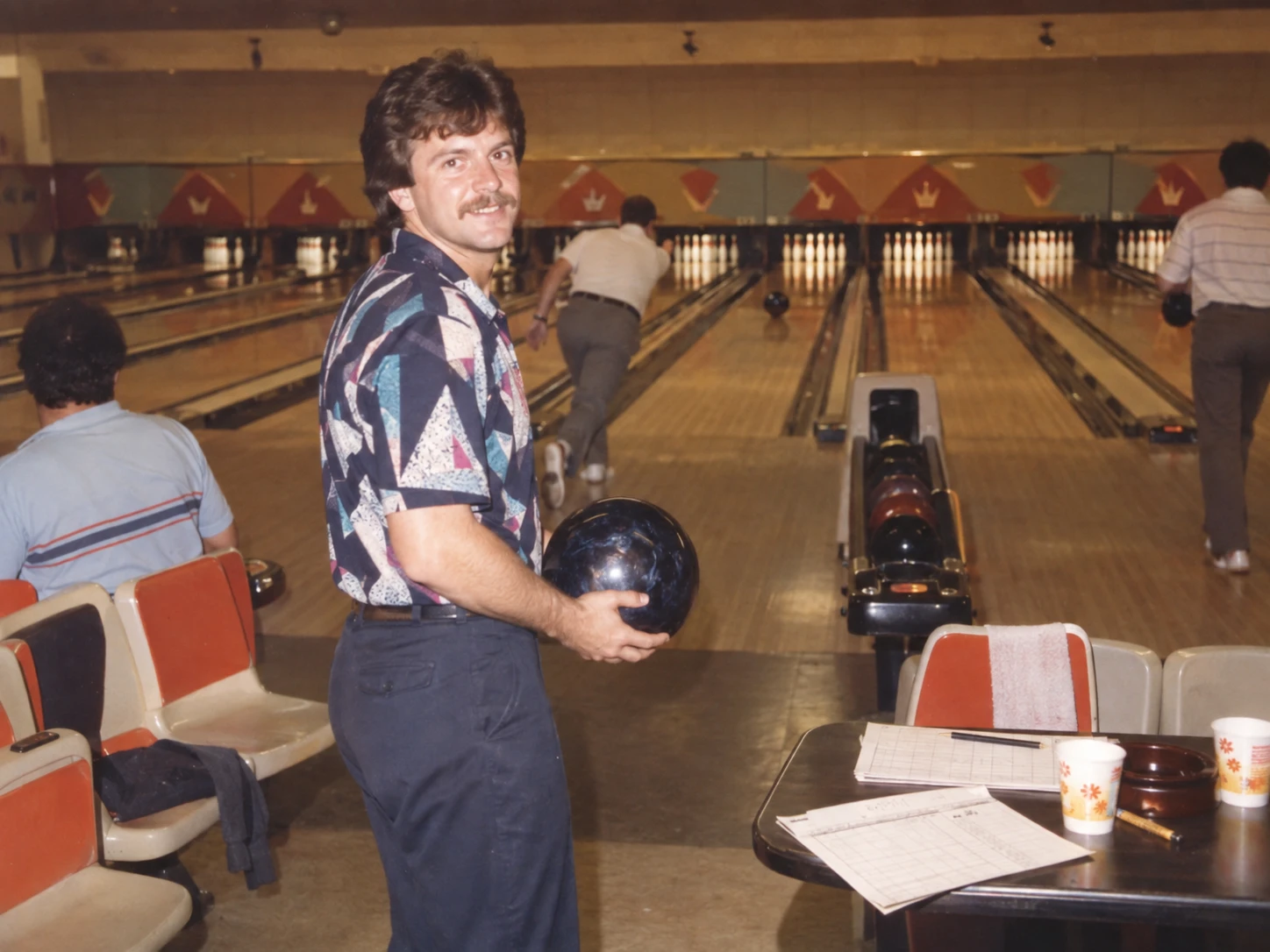
Authenticity Anchors: manual score sheets / patterned bowling shirt / molded plastic seats / direct flash
What you can change: bowler → two teammates / league captain; patterned bowling shirt → team polo shirt; bowling lane → score table area / ball return area.
A very useful detail here is manual score sheets. Modern digital scoreboards can make the image look too current.
7. 1980s Airport Traveler
Airports are a great but often overlooked period setting.
Authentic 1980s airport terminal photograph, traveler standing beside a hard-shell suitcase near a departure gate, simple trench coat, paper airline ticket and folded newspaper in hand, rows of molded terminal seats, analog departure board in the background, fluorescent ceiling lights, slightly cool film tones, subtle grain, candid travel photography, 4:3
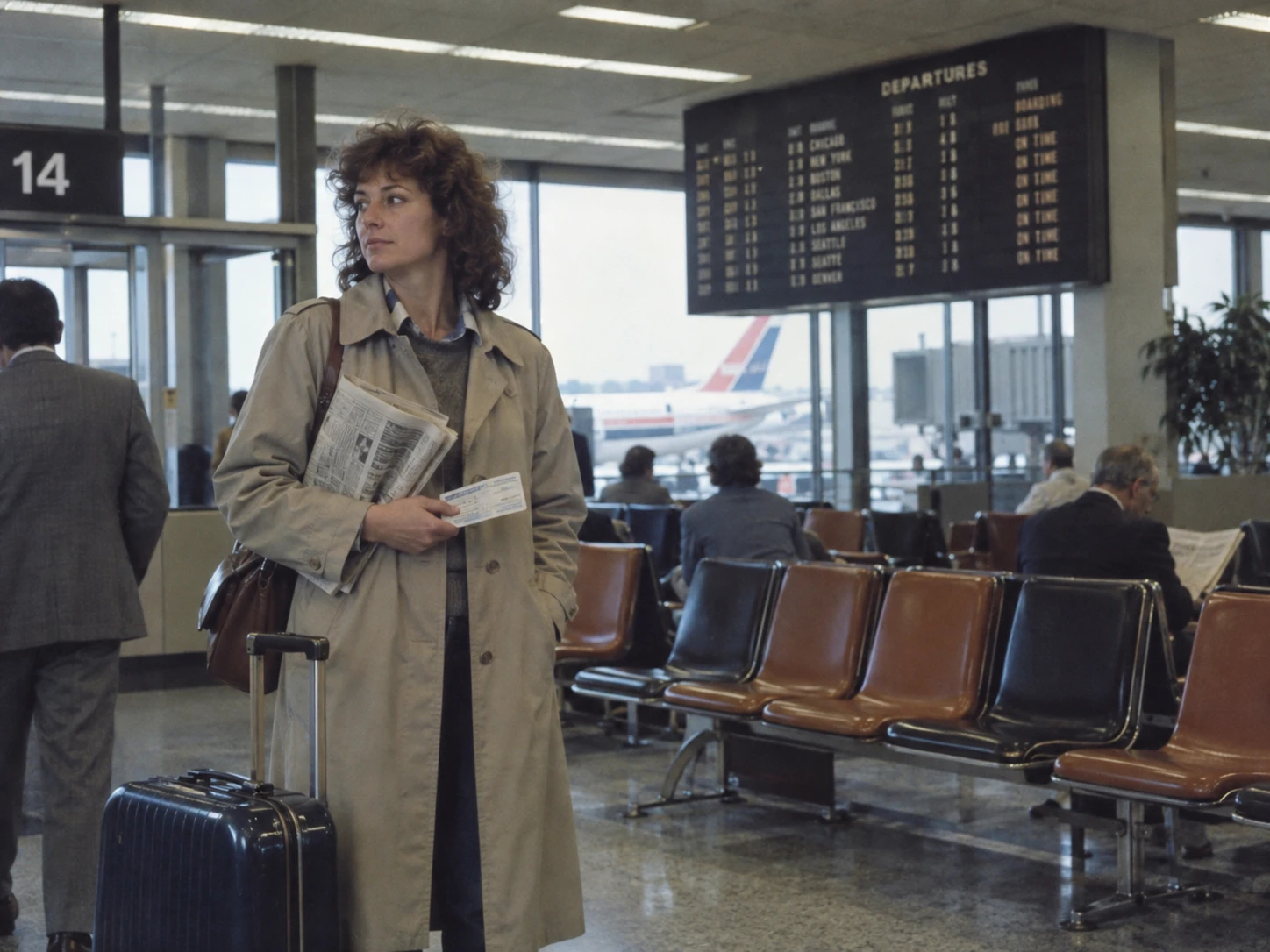
Authenticity Anchors: paper airline ticket / hard-shell suitcase / analog departure board / folded newspaper
What you can change: traveler → business traveler / family traveler / solo tourist; trench coat → wool coat / windbreaker; departure gate → check-in area / arrival hall.
Avoid modern check-in kiosks, mobile phones, or QR-code boarding details.
8. Mountain Ski Lodge Guest
This works especially well for winter travel and vacation nostalgia.
1980s ski lodge photograph, skier standing near the entrance of a rustic mountain lodge wearing a bright color-block ski jacket, knit hat and classic ski goggles, wooden skis leaning against the wall, snow visible outside through large windows, warm indoor tungsten lighting mixed with camera flash, slightly faded film colors, soft analog grain, natural vacation snapshot, 4:3
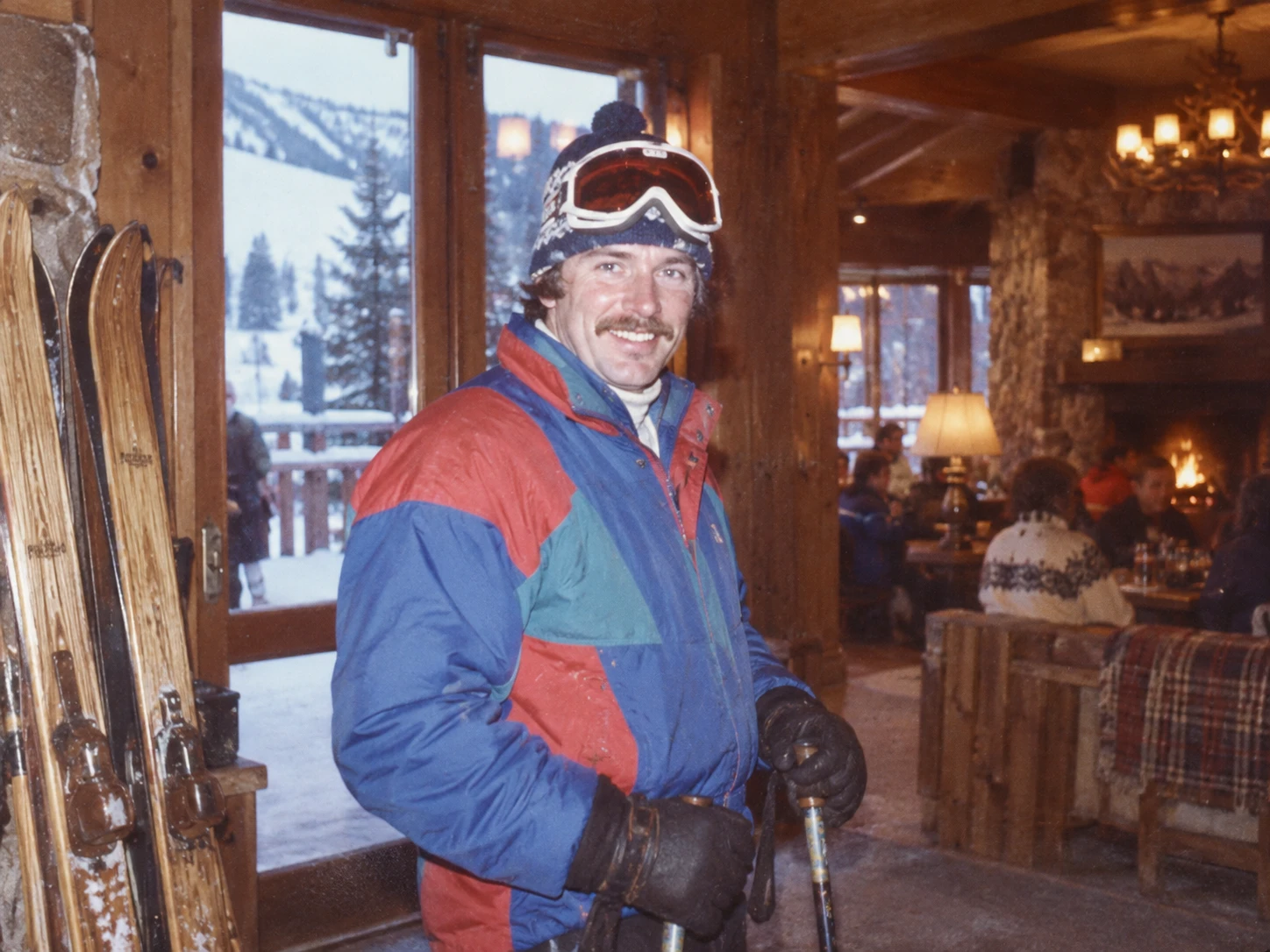
Authenticity Anchors: color-block ski jacket / wooden skis / classic goggles / tungsten light + flash
What you can change: skier → pair of travelers / family member; mountain lodge → ski rental room / lodge lounge; wooden skis → stacked old ski gear.
The color-block styling of 1980s ski wear already carries a lot of period identity by itself.
9. Newspaper Photographer on Assignment
Here, the photographer becomes the subject, which makes the image especially useful for a retro-photography theme.
1980s newspaper photographer standing outside a municipal building, carrying a manual 35mm SLR camera with shoulder strap and compact flash unit, simple utility jacket, press notebook tucked into one pocket, parked boxy sedans in the background, cloudy daylight, slightly desaturated film colors, natural documentary composition, visible grain, authentic press photography feel, 4:3
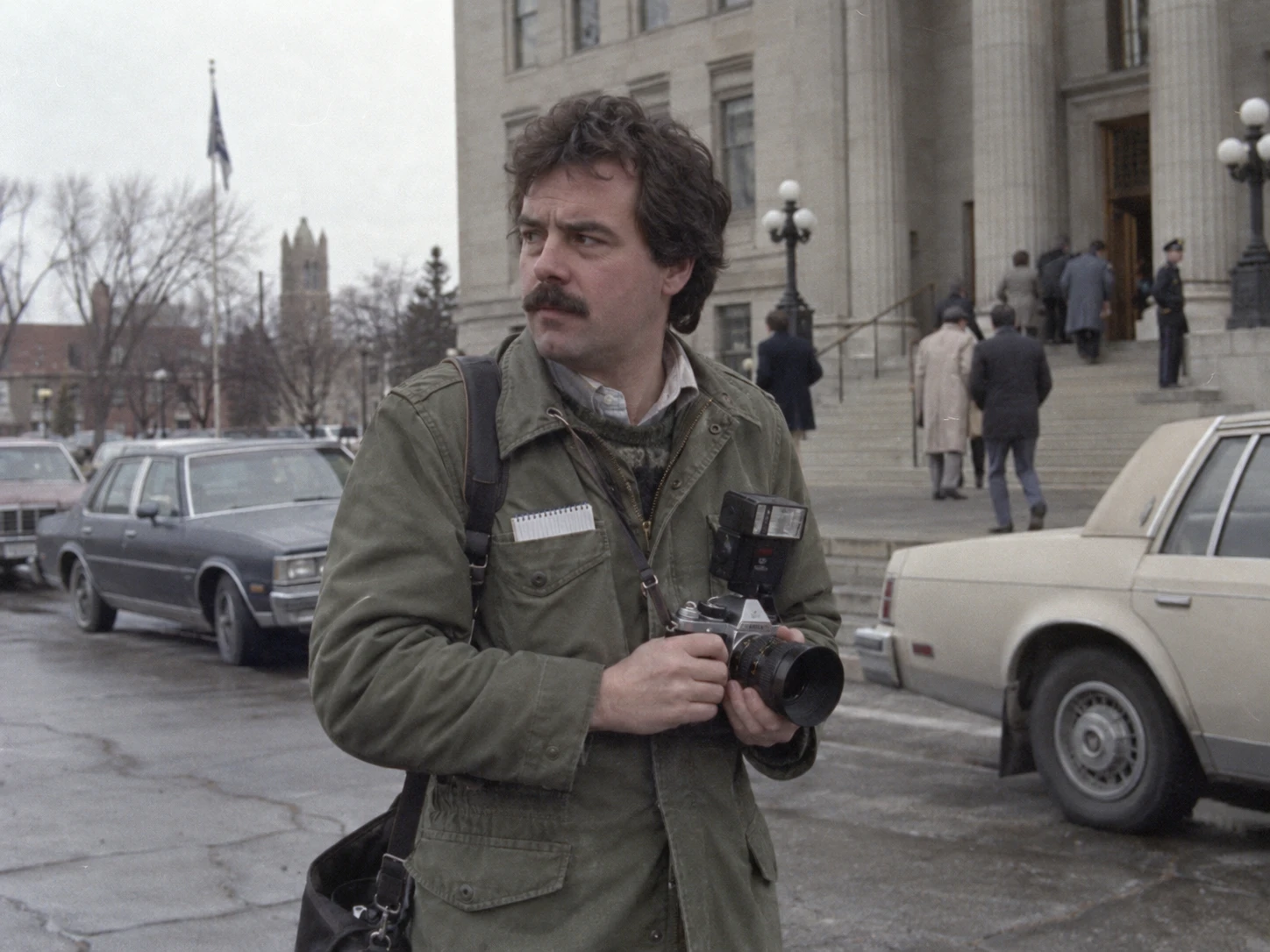
Authenticity Anchors: manual 35mm SLR / compact flash unit / press notebook / boxy sedans
What you can change: newspaper photographer → local reporter / photojournalist; municipal building → courthouse entrance / small-town main street; utility jacket → plain windbreaker.
This scene does not need dramatic lighting. A natural news-assignment look is stronger.
10. Neighborhood Supermarket Cashier
An ordinary daily-life setting often feels more believable than an obviously staged “retro” photo.
Authentic 1980s neighborhood supermarket photograph, cashier standing behind a checkout counter with a boxy electronic cash register, paper grocery bags, canned food and boxed goods on the conveyor, simple store uniform, fluorescent ceiling lighting, colorful printed price signs without readable text, direct camera flash, slightly faded consumer film, subtle grain, everyday documentary photography, 4:3
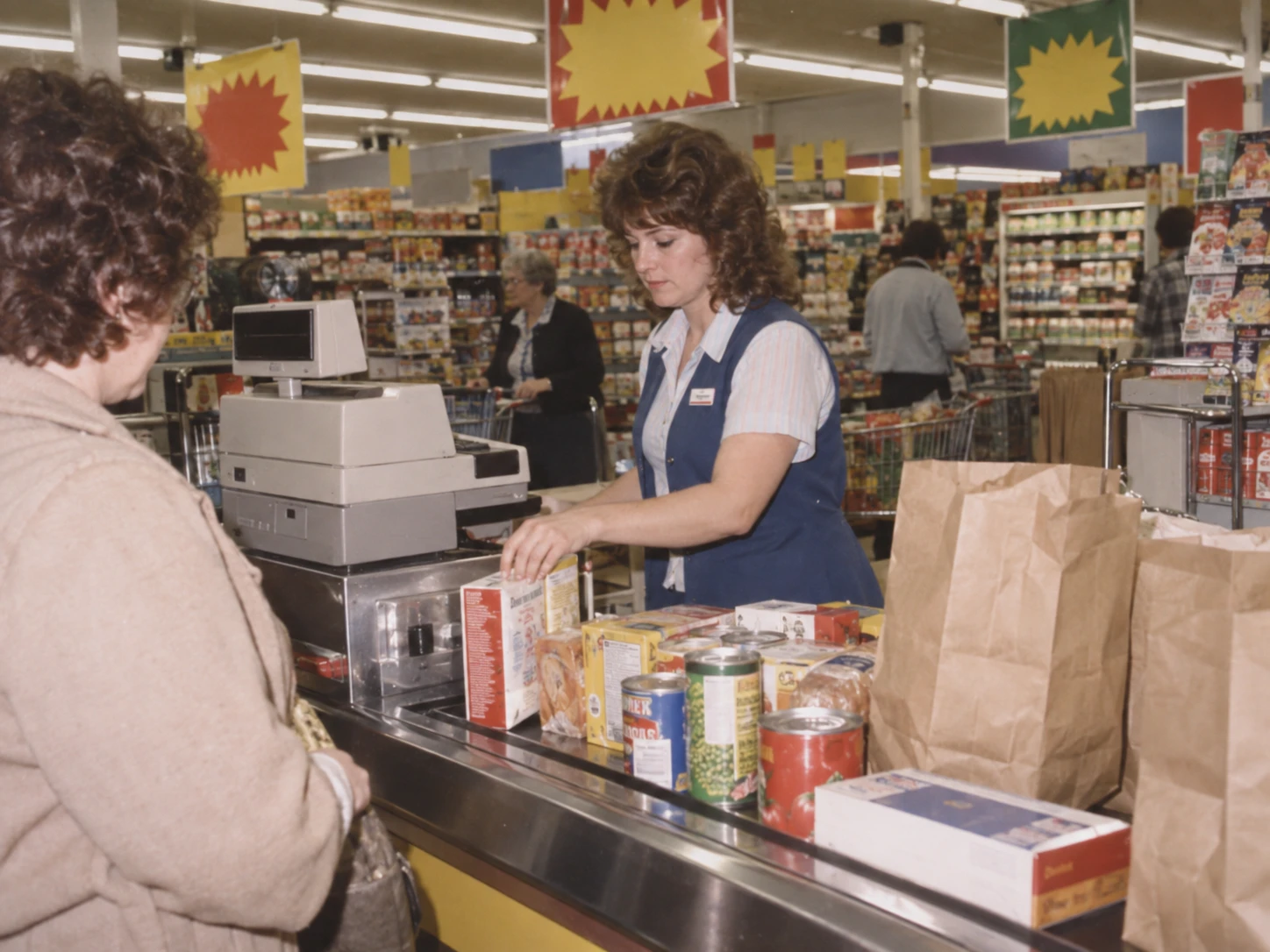
Authenticity Anchors: boxy cash register / paper grocery bags / boxed goods / fluorescent ceiling lighting
What you can change: cashier → store employee / shopper at checkout; paper grocery bags → cart full of groceries; store uniform → simple apron / short-sleeve store shirt.
Scenes like this often work well because they feel ordinary and therefore more believable.
Why Do Some 1980s Prompts Still Look Too Modern?
The problem is often not that the prompt is too short. It is that the visual signals conflict with each other.
For example:
1980s photograph, ultra sharp, flawless studio lighting, perfect skin, modern minimalist interior
The first half says 1980s, but the rest still describes a modern polished commercial image.
If you want a more believable result, phrases like these are usually more helpful:
slightly faded colors
soft analog grain
direct camera flash
uneven exposure
slight motion blur
casual documentary composition
These details are not there to make the image “worse.” They are there to reduce the modern digital perfection.
What Creates the 1980s Feeling in Each Scene?
| Scene | Strongest Period Element | Most Useful Photo Texture |
|---|---|---|
| Garage Band | Amplifiers, drum kit, cables | Flash + Grain |
| TV Studio | Printed map, old camera | Flat Lighting |
| Record Store | Vinyl, cassettes, price cards | Faded Film |
| Home Computer | CRT, floppy disks, printer paper | Warm Snapshot |
| Repair Garage | Manuals, tool cabinet, work lights | Documentary Look |
| Bowling Alley | Score sheets, team shirt | Direct Flash |
| Airport | Paper ticket, departure board | Cool Film Tone |
| Ski Lodge | Ski jacket, wooden skis | Warm Flash |
| Press Photographer | 35mm camera, notebook | Desaturated Film |
| Supermarket | Cash register, paper bags | Consumer Film |
This table helps users choose which kind of 1980s they actually want, instead of only asking for “80s style.”
A Flexible Way to Build Your Own 1980s AI Photo Prompt
You do not need to copy every prompt exactly.
A simple method is to combine five modules:
Role → Place → Period Object → Lighting → Film Texture
For example:
record store clerk
+ independent record shop
+ cassette racks
+ fluorescent lights
+ faded consumer film
That structure is often enough to create a scene with a clear time period.
The goal is not to make the prompt longer and longer. The goal is to include at least two or three era-specific elements that would not normally appear in a modern photo.
Final Thoughts
A strong 1980s AI photo prompt should feel like a real memory from another decade, even before anyone reads the caption.
The most useful prompt details are rarely just retro or vintage.
What really works is a combination of old equipment, period silhouettes, recognizable public spaces, direct flash, film grain, and slightly imperfect composition.
If you want to keep building your own prompts after these examples, Wann’s Best Prompt Words for AI-Generated Images is a useful next step for learning how to combine subjects, environments, lighting, and image details more effectively.