



By 2026, creators no longer ask whether AI can “make nice-looking videos”. The era of flashy demo gimmicks is over. Today there are only three critical questions: Can it preserve my consistent character and visual style? Can it keep up with current content trends? And can it deliver usable outputs at scale?
With the wide public release of Seedance 2.5 and Wan 3.0, AI-generated video has officially entered the production-grade storytelling era. These are far more than simple text-to-video generators — they act as your on-demand digital dynamic-content art directors.
But which one fits your real-world creation needs? Let’s break down this heavy-weight model showdown.
Article navigation
· Why 2026 marks the year AI video finally “cracked the code” for real-world use
· Seedance 2.5 vs Wan 3.0: The truth behind 2026 benchmark tests
· Workflow decision guide: Which one should you pick?
· Step-by-step hands-on guide for models on the Wann platform
· Frequently asked questions
Why 2026 marks the year AI video finally “cracked the code” for real-world use
We have left behind the old lottery-style AI video era, where usable results depended purely on luck. Character glitches, jarring shot transitions and broken story logic were constant headaches.
Four core capabilities drive the major leaps of 2026-era video models:
1. Physically grounded visual realism
Gone are uncanny-valley lighting and plastic-looking renders. Shadows, reflections and fabric drape follow real world physical rules, cutting down unnatural synthetic artifacts.
2. Long-sequence storytelling capability
No longer limited to short 10-second clips. 30-second continuous shots are supported, with far fewer jarring character or scene shifts between cuts, making full short-story animations feasible.
3. Strong reference-image adherence
Upload character or scene references to maintain consistent identities across different shots. Series short videos and sequential animations no longer produce completely redesigned characters on every generation run.
4. High-fidelity detail preservation
Props, accessories and environmental details can be retained stably, opening up production-ready possibilities for commercial ads, IP animations and narrative content.
Seedance 2.5 vs Wan 3.0: The truth behind 2026 benchmark tests
Set marketing hype aside and look at real-world performance. Both belong to the top-tier video model roster, yet each excels in distinct areas.
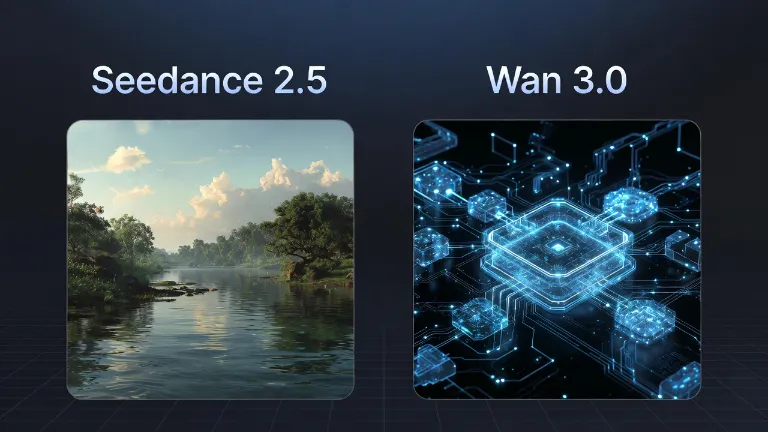
Atmospheric realism champion: Seedance 2.5 Strengths: Industry-leading rendering of realistic scenes, complex environments and cinematic lighting. It delivers rich visual layers and smooth camera movement for atmospheric clips and live-action-style narrative segments.
Brand-use highlights: Great for mood-focused short films and live-action-style advertising footage.
Real-world caveat: It builds on the lighting foundation of earlier Seedance iterations. Minor character-detail drift may occur with multi-character scenes.
Narrative coherence champion: Wan 3.0 Strengths: Superior long-sequence story logic. It delivers smoother plot continuity across shot changes and precise detail reproduction.
Brand-use highlights: Ideal for story-driven animations and narrative short videos that require complete narrative arcs.
Real-world caveat: While its storytelling performance shines, its atmospheric lighting for photoreal scenes occasionally falls short of Seedance 2.5. Fast-motion sequences can trigger occasional object deformation.
Performance Overview: Seedance 2.5 vs Wan 3.0
| Feature | Seedance 2.5 | Wan 3.0 |
| Core label | Atmospheric realism specialist | Story-focused narrative powerhouse |
| Maximum duration | 30 seconds | 30 seconds |
| Character consistency | Strong for single-character work; drift risk for multi character scenes | Excellent; stable persona retention across long sequences |
| Render speed | Moderate; prioritizes visual fidelity | Moderate-fast; efficient iterative generation |
| Camera work | Cinematic shots; outstanding environmental lighting performance | Solid, plot-oriented camera language |
| Reference image adherence | Excels at environment and art-style references | Strong at IP-character reference reproduction |
| Best for | Mood-driven shorts, live-action-style ads, environment-focused content | Story animations, narrative shorts, serialized IP clips |
Workflow decision guide: Which one should you pick?
Your choice hinges on your priority: immersive atmospheric visuals, or consistent, coherent storytelling.
Seedance 2.5: An atmosphere-focused production engine. Prioritizes environmental lighting and cinematic immersion for mood-heavy pieces with loose plot requirements.
Wan 3.0: A story-building production engine. Prioritizes temporal logic and character stability; it “remembers” personas well across long shots for complete short narratives.
Scenario-based selection guide
| Use case | Recommended model | Rationale |
| Atmospheric short videos, live-action-style ad assets | Seedance 2.5 | Superior environmental lighting and cinematic atmosphere |
| IP animations, serialized narrative shorts | Wan 3.0 | Robust cross-shot character consistency and narrative flow |
| Rapid iterative prototyping with many variants | Wan 3.0 | Higher generation efficiency for prompt debugging |
| Landscape-focused, dialogue-free mood shorts | Seedance 2.5 | Mastery of environmental rendering for emotional tone-setting |
Pro workflow tip: Many creators avoid locking themselves to one single model. Run the same prompt on both models, then edit together the best segments from each output for elevated final results.
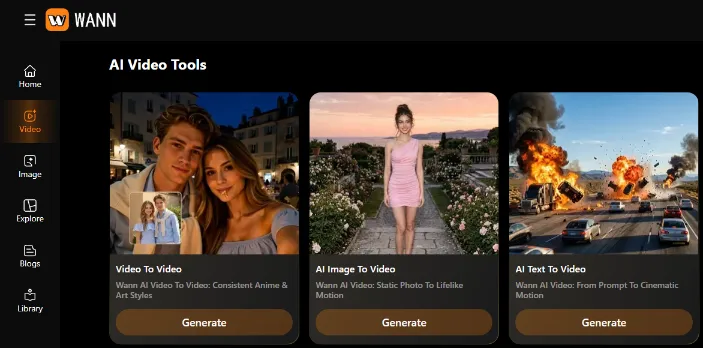
Jumping between separate SDKs and websites to test multiple models is frustrating. Wann aggregates Seedance 2.5, Wan 3.0, Minimax H3, Kling 3.0 and many other leading video models within one unified interface. No extra account registrations are required for side-by-side comparative testing.
Wann — All-in-one AI video creation workspace It consolidates leading video foundation models, supporting image-to-video and text-to-video workflows for short-form creators and animation artists.
Quota costs and feature limits are subject to real-time display inside the Wann platform.
Hands-on 3-step workflow inside Wann
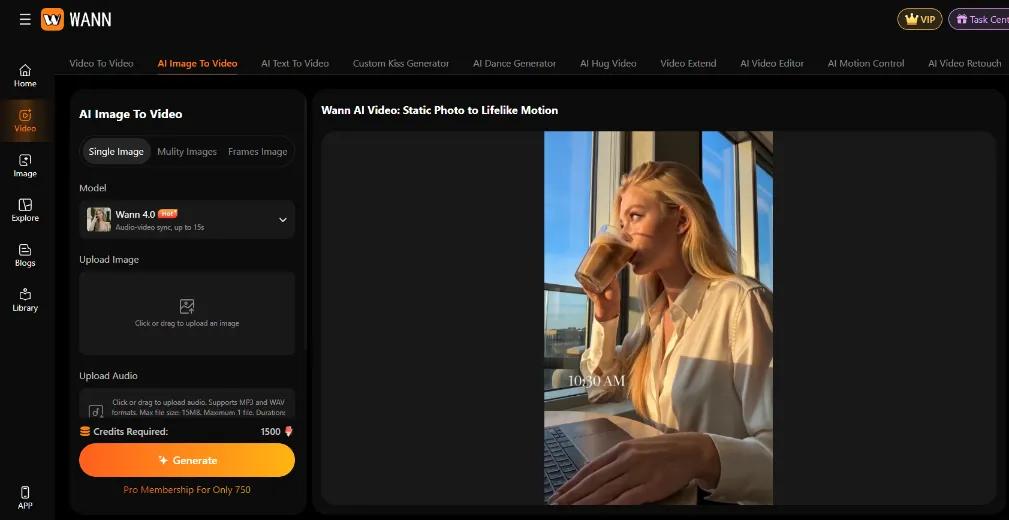
1. Open Wann, navigate to the left-hand Video module and launch AI Image-to-Video. Upload your reference image (character concept or scene layout).
2. Open the model dropdown menu and select either Seedance 2.5 or Wan 3.0 aligned with your creative goal, then set your target video duration.
3. Describe your scene, mood and camera movement in the prompt box and click generate.
Once finished, preview outputs in the asset library. Make quick in-platform tweaks and download production-ready video files directly.
Note: Quota consumption varies across different models. Always refer to real-time values shown on the Wann interface.
Frequently Asked Questions
Q1: Do both models support reference-image generation?
A: Yes, yet with different strengths. Seedance 2.5 performs best with environment and art-style references; Wan 3.0 is stronger for IP-character recreation. Minor character drift can still occur with multi-character scenes for both models. Wann lets you toggle quickly between them to observe output differences.
Q2: Are 30-second generations prone to glitches?
A: Major improvements have been made over older generations, yet 30-second outputs remain computationally heavy. Avoid scripting overly complex continuous motion sequences for more stable results.
Q3: What is the difference between using an aggregated platform like Wann versus accessing base models directly?
A: Aggregated platforms place multiple models under one UI, removing the hassle of switching between separate websites. Platform-level parameter wrapping applies, so final performance and credit costs are determined by Wann’s live-interface information.
Conclusion
There is no universal “perfect” AI video model. Stop searching for one tool that solves every creative task. Pick Seedance 2.5 for cinematic atmosphere. Choose Wan 3.0 for coherent storytelling and stable IP character rendering. Advanced creators mix outputs from both models. Treat AI as a creative assistant, not a source of instant finished work.
Aggregated platforms such as Wann reduce your trial-and-error overhead. You can benchmark dozens of models in a single workspace and find the best fit for your subject matter.



'%20fill-opacity='.4'/%3e%3cpath%20d='M29.07%2012c.982%200%201.473%200%201.88.194.35.166.667.457.863.79.23.389.27.859.354%201.797.27%203.072.518%207.922-.297%2010.472-1.03%203.22-5.8%206.507-8.257%208.023-.477.295-.715.441-1.038.515a2.227%202.227%200%200%201-.868.006c-.324-.07-.565-.215-1.046-.504-2.512-1.51-7.435-4.811-8.478-8.04-.888-2.752-.622-7.52-.327-10.524.09-.914.135-1.372.365-1.757.196-.327.516-.617.86-.78.407-.193.89-.192%201.853-.192H29.07z'%20fill='var(--fill-0,%20%23FD7F11)'/%3e%3cpath%20d='M26.337%2017.75a.854.854%200%200%201%201.212-.11.872.872%200%200%201%20.11%201.218l-6.088%207.392a.855.855%200%200%201-1.2.122l-.07-.063-3.906-3.944a.871.871%200%200%201%200-1.222.853.853%200%200%201%201.216%200l3.24%203.268%205.486-6.66z'%20fill='var(--fill-0,%20white)'/%3e%3c/svg%3e)