



2026 has brought massive upgrades to AI image and video generation. The latest wave of text-to-video and text-to-image models has completely changed how creators produce visual content. Whether you need high-end commercial clips or bulk short-form social media videos, every major AI lab has launched its flagship model.
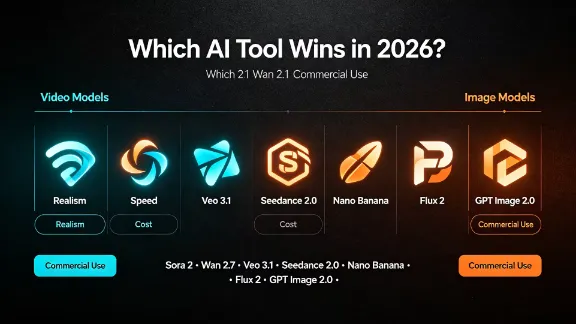
In this article, we cover the seven most popular AI visual tools: OpenAI Sora 2, GPT Image 2.0, Google Veo 3.1, Nano Banana, Alibaba Wan 2.7, ByteDance Seedance 2.0, and Flux 2. If you’re a content creator, e-commerce marketer, or AI enthusiast struggling to pick the right AI model, this side-by-side comparison will help you choose the perfect tool for your workflow.
Quick AI Model Overview
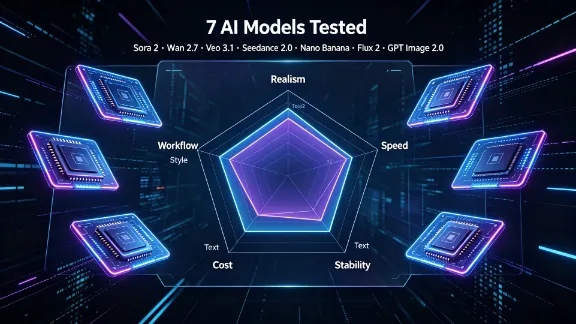
I’ve sorted these 7 tools into two clear categories: 4 video generation models and 3 image generation models. To be honest, there is no “perfect all-in-one” AI model. Every tool has unique strengths and weaknesses and serves different content scenarios. Choosing based on your needs is always the best strategy.
Video Models: Sora 2, Wan 2.7, Veo 3.1, Seedance 2.0
Image Models: Nano Banana, Flux 2, GPT Image 2.0
🆚Core Features & Differences Comparison Table
| Model | Core Advantage | Main Weakness | Speed | Best Use Case |
| Sora 2 | Industry-leading physics simulation, cinematic lighting, ultra-realistic textures, stable footage | Slow generation speed, high cost, not suitable for bulk content | Slow (Premium Quality) | Luxury ads, cinematic short films, high-end commercial visuals |
| Wan 2.7 | Ultra-stable long shots, native 9:16 vertical support, excellent cost performance | Slightly weaker photorealism and artistic expression than top-tier models | Fast | Bulk TikTok/Reels, sports videos, landscape & lifestyle clips |
| Veo 3.1 | Hyper-realistic visuals, native audio sync, outstanding image-to-video conversion | Limited maximum duration, relatively high generation cost | Medium-Slow | Product demos, real estate tours, commercial showcase videos |
| Seedance 2.0 | Extremely fast rendering, solid character consistency for series content | Average high-end texture detail, less cinematic atmosphere | Very Fast | Mass short-form content, influencer series, live stream highlights |
| Nano Banana | Crisp text rendering, stable multi-character output, studio-level commercial quality | High credit consumption, limited support for niche art styles | Medium | Brand posters, product banners, commercial marketing visuals |
| Flux 2 | Full LoRA compatibility, flexible stylization, low-cost creative iteration | Unstable text generation, inconsistent character replication | Fast | Concept art, custom creative visuals, design drafts |
| GPT Image 2.0 | Seamless ChatGPT integration, accurate prompt understanding, user-friendly | Limited commercial details, simple and rigid visual styles | Fast | Blog illustrations, simple marketing images, beginner creators |

In-Depth Model Breakdown & Use Cases
Video Models: Quality, Speed & Stability
Sora 2 remains the gold standard for premium AI video quality. Its upgraded physics simulation fixes common AI issues like distorted objects, unnatural movement, and broken lighting. It delivers true cinematic visuals perfect for luxury advertisements and artistic short films. The only downsides are its slow rendering speed and high pricing, making it unsuitable for bulk daily content creation.
Wan 2.7 is the best budget-friendly choice for short-form creators. It excels at stable long tracking shots, smooth drone movement, and vertical 9:16 output tailored for TikTok and YouTube Shorts. It generates clean, watchable clips at a very low cost. It just cannot match Sora 2 and Veo 3.1 in ultra-fine texture and layered lighting.
Veo 3.1 is built for commercial product marketing. Its biggest advantage is built-in audio synchronization — generated videos come with matching ambient sound, saving you tons of post-production work. With top-tier photorealism, it works best for product showcases and real estate videos. The main limitations are its short maximum duration and higher per-clip cost.
Seedance 2.0 focuses on speed and consistent series content. Its character lock and frame transition features keep your talent’s appearance uniform across dozens of videos. As the fastest video model in this lineup, it’s ideal for creators who post frequent vlogs, series clips, and stream highlights. It sacrifices a small amount of cinematic detail for faster turnaround.
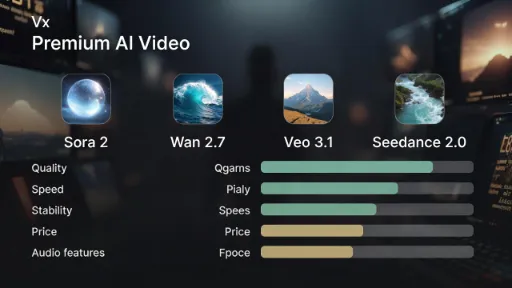
Image Models: Commercial Quality, Creativity & Practicality
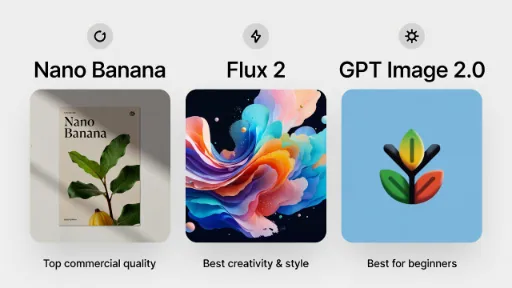
Nano Banana is the top pick for commercial imagery. Unlike most AI image tools that struggle with blurry text and messed-up multi-character faces, Nano Banana produces clean, sharp, professional-grade visuals. It’s perfect for brand posters, product covers, and printable marketing assets. The only downside is higher credit usage and weaker support for niche artistic styles.
Flux 2 targets creative designers and style-focused creators. It supports full LoRA customization and unique aesthetic tuning, letting you create concept art, abstract visuals, and custom artwork with great flexibility. It’s cheap for rapid iteration, though it struggles with text accuracy and consistent character reproduction.
GPT Image 2.0 is the ultimate lightweight tool for bloggers and beginners. Fully integrated with ChatGPT, it lets you write scripts and generate matching images in one workflow without switching tools. It’s simple, stable, and great for basic illustrations and casual social media visuals. It lacks the advanced detail required for high-end commercial design.
Quick Creator Selection Guide
Choose Sora 2 for cinematic quality and luxury commercial videos.
Choose Wan 2.7 for stable, low-budget bulk vertical short videos.
Choose Veo 3.1 for product demos and automatic audio-matched footage.
Choose Seedance 2.0 for fast, consistent series content and high-frequency posting.
Choose Nano Banana for professional commercial posters and brand visuals.
Choose Flux 2 for custom artistic styles and creative concept design.
Choose GPT Image 2.0 for fast, simple illustrations and beginner-friendly content.
❤️Conclusion
AI visual creation in 2026 is no longer one-size-fits-all. Every top model has clear strengths for specific scenarios. There is no absolute “best” tool — only the best tool for your content goals, budget, and posting frequency. By using this model comparison, you can build a faster, higher-quality, and cost-efficient AI creation workflow for all your social media and commercial projects.



'%20fill-opacity='.4'/%3e%3cpath%20d='M29.07%2012c.982%200%201.473%200%201.88.194.35.166.667.457.863.79.23.389.27.859.354%201.797.27%203.072.518%207.922-.297%2010.472-1.03%203.22-5.8%206.507-8.257%208.023-.477.295-.715.441-1.038.515a2.227%202.227%200%200%201-.868.006c-.324-.07-.565-.215-1.046-.504-2.512-1.51-7.435-4.811-8.478-8.04-.888-2.752-.622-7.52-.327-10.524.09-.914.135-1.372.365-1.757.196-.327.516-.617.86-.78.407-.193.89-.192%201.853-.192H29.07z'%20fill='var(--fill-0,%20%23FD7F11)'/%3e%3cpath%20d='M26.337%2017.75a.854.854%200%200%201%201.212-.11.872.872%200%200%201%20.11%201.218l-6.088%207.392a.855.855%200%200%201-1.2.122l-.07-.063-3.906-3.944a.871.871%200%200%201%200-1.222.853.853%200%200%201%201.216%200l3.24%203.268%205.486-6.66z'%20fill='var(--fill-0,%20white)'/%3e%3c/svg%3e)