



Creating a cute cartoon character with AI seems simple at first. You describe an idea, enter a prompt, and wait for the image to appear. However, many people quickly discover that the results often feel generic. The character may look attractive, but it lacks personality, identity, and the kind of visual charm that makes people remember it.
The reason is simple: AI does not create characters based on the word “cute”. It creates images based on the visual information you provide. If your prompt only describes a category, the AI can only generate an average interpretation of that category.A successful AI cartoon character is not created by adding more random keywords. It comes from understanding the principles behind character design and translating those ideas into a language that AI can understand.
AI Character Design Prompt Guide
| Section | Core Key Points |
|---|---|
| 1. Common Beginner Mistake: Don’t use "cute" as your core design direction | • Words like cute / adorable / kawaii only adjust mood, cannot shape unique character identity • A distinctive character needs clear positioning: unique personality, visual theme, exclusive details, a complete inner logic • Design priority: Confirm temperament (playful / brave / mysterious etc.) first; then select colors, outfits and decorations • High-quality prompts start from creative concepts, not random visual keyword stacking |
| 2. Mindset Shift: Think as a character designer, not merely a prompt writer | • Avoid simply collecting and splicing popular prompt terms, which leads to disjointed visuals • Design thinking framework: Character personality → matching visual elements → recognizable exclusive features • Rule: All visual choices must serve the unified core concept • A powerful prompt is a coherent visual story, not a disordered description list |
| 3. Four Essential Elements of Memorable Characters | • Silhouette: Overall outline & body proportion, forms the first visual impression • Facial expression: Eyes, mouth and emotional details establish emotional resonance • Color language: Colors convey emotions, not just decoration (pastel = warm & gentle; dark bold tones = mysterious / adventurous) • Signature detail: Unique hairstyle, accessory, feature to build exclusive identity • Principle: Focus on several meaningful details, avoid countless random elements |
| 4. Convert Creative Concepts into Standard AI Prompts | • A complete prompt needs to clarify 4 dimensions: character identity, unique visual features, art style, scene atmosphere • Describe the desired visual atmosphere & feeling, not only physical appearance • Combine identity, look, emotion, environment and art style integrally • Example: Do not only write "a rabbit"; describe its temperament, features, mood and background world |
| 5. Iterative Optimization: Perfect characters via repeated adjustments | • Nearly no prompt generates ideal work in one attempt; iterative adjustment is standard workflow • Analyze flaws of initial draft: generic modelling, vague temperament, inconsistent style, lack of expression • Optimize targeted parts instead of rewriting the whole prompt • AI creation is continuous interaction between your idea and AI interpretation |
| 6. Character Consistency (For Brand, Story & Long-term Content) | • One nice picture is easy; keeping character stability across multiple scenes is difficult • Keep core features, personality and signature details unchanged under different scenes • Critical usage scenarios: children’s stories, social media content, stickers, games, brand IP • Consistency turns a single AI artwork into usable official character IP |
Example
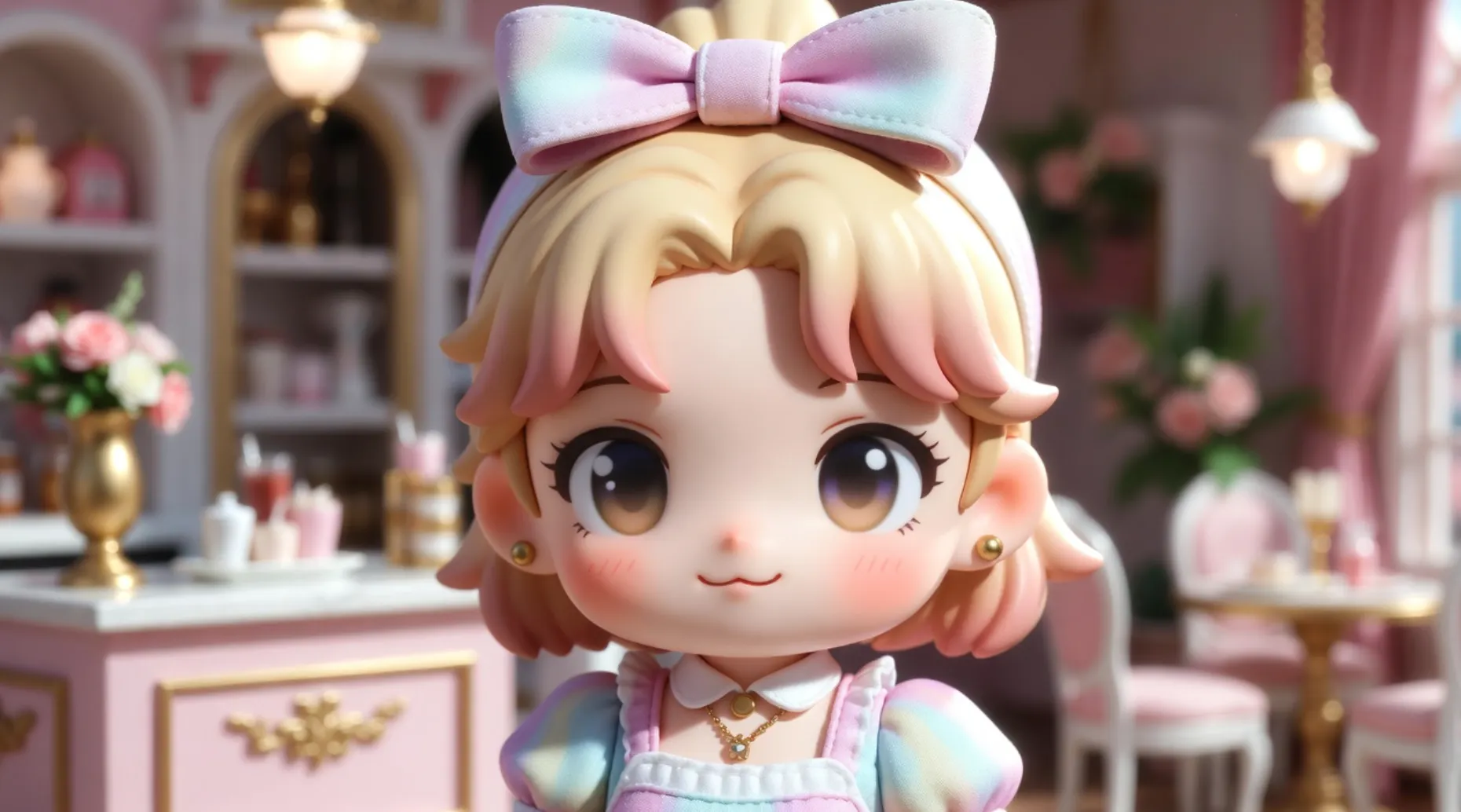
A charming 3D chibi girl collectible figure, anime-inspired cute face, large expressive eyes, soft smile, rosy cheeks, realistic doll-like skin texture, cartoon proportions with a large head and small body, wearing a pastel cafe uniform with tiny accessories, premium vinyl toy craftsmanship, handcrafted collectible doll appearance, placed in a luxurious pastel coffee shop interior with miniature furniture and elegant decorations, soft cinematic studio lighting, gentle highlights on the surface, realistic materials, smooth plastic and resin texture, high-end designer toy aesthetic, realistic 3D rendering combined with cartoon style, professional product photography, ultra detailed collectible toy model
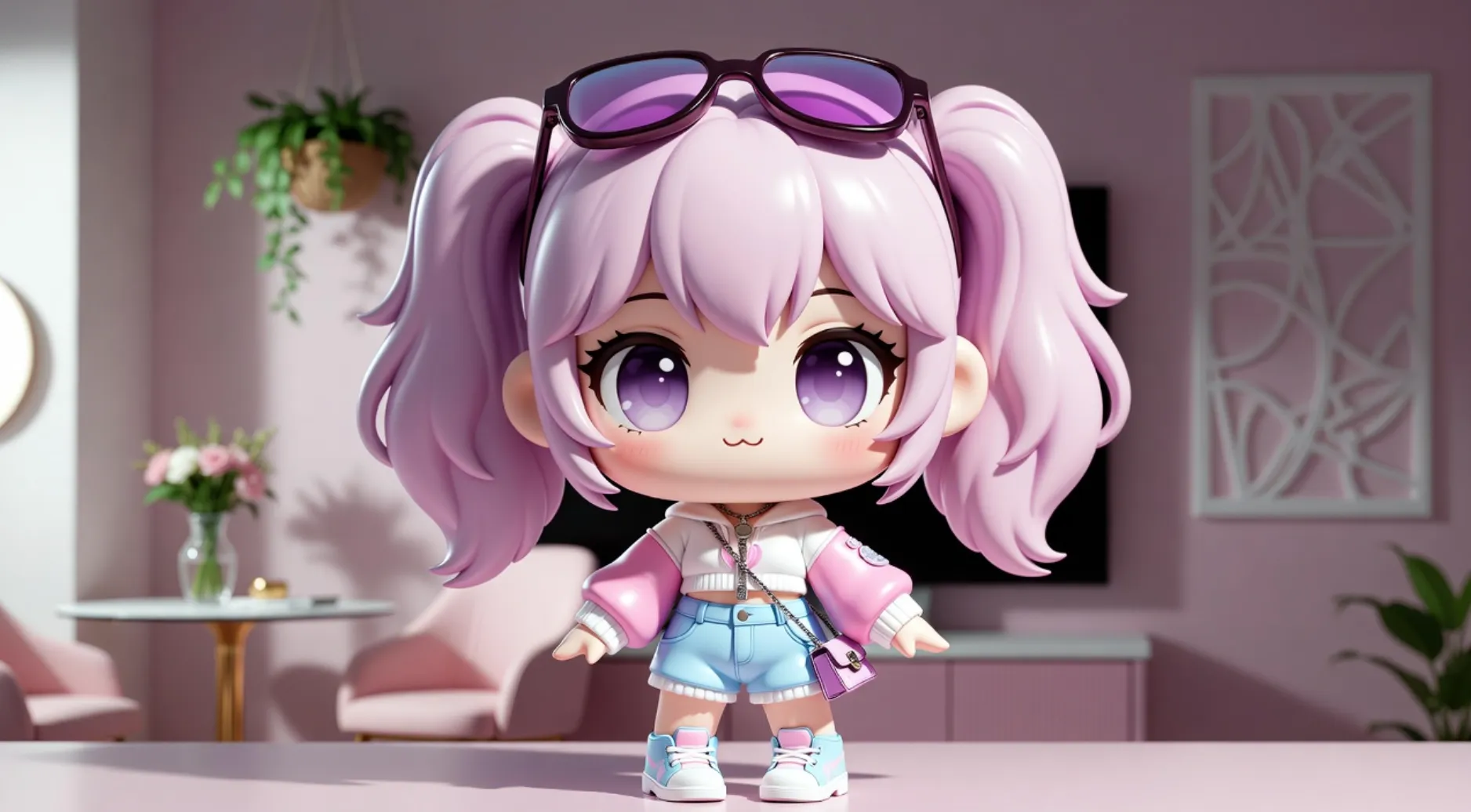
A stylish 3D chibi girl designer toy character, cute anime-inspired face with oversized eyes and charming expression, realistic collectible doll proportions, fashionable pastel streetwear outfit, detailed miniature accessories, premium soft vinyl figure texture, smooth resin surface, luxury blind box toy aesthetic, displayed in a modern pastel luxury room with designer furniture and soft decorative elements, cinematic lighting setup, soft shadows, realistic material rendering, ultra detailed 3D modeling, cartoon proportions with realistic textures, high-end collectible toy photography, professional studio render, 8K ultra realistic 3D character visualization
Final Thoughts
AI makes cartoon character creation accessible to everyone, but the quality of the result depends on more than the image generator itself.The most effective creators do not simply search for better keywords. They learn how to think about character design and communicate their ideas clearly.
A cute character needs more than big eyes and soft colors. It needs personality, visual identity, and details that make people remember it.When you approach AI prompting as a creative process rather than a keyword exercise, you can create cartoon characters that feel original, expressive, and full of life.The goal is not just to generate a cute image. The goal is to create a character that people want to remember.



'%20fill-opacity='.4'/%3e%3cpath%20d='M29.07%2012c.982%200%201.473%200%201.88.194.35.166.667.457.863.79.23.389.27.859.354%201.797.27%203.072.518%207.922-.297%2010.472-1.03%203.22-5.8%206.507-8.257%208.023-.477.295-.715.441-1.038.515a2.227%202.227%200%200%201-.868.006c-.324-.07-.565-.215-1.046-.504-2.512-1.51-7.435-4.811-8.478-8.04-.888-2.752-.622-7.52-.327-10.524.09-.914.135-1.372.365-1.757.196-.327.516-.617.86-.78.407-.193.89-.192%201.853-.192H29.07z'%20fill='var(--fill-0,%20%23FD7F11)'/%3e%3cpath%20d='M26.337%2017.75a.854.854%200%200%201%201.212-.11.872.872%200%200%201%20.11%201.218l-6.088%207.392a.855.855%200%200%201-1.2.122l-.07-.063-3.906-3.944a.871.871%200%200%201%200-1.222.853.853%200%200%201%201.216%200l3.24%203.268%205.486-6.66z'%20fill='var(--fill-0,%20white)'/%3e%3c/svg%3e)